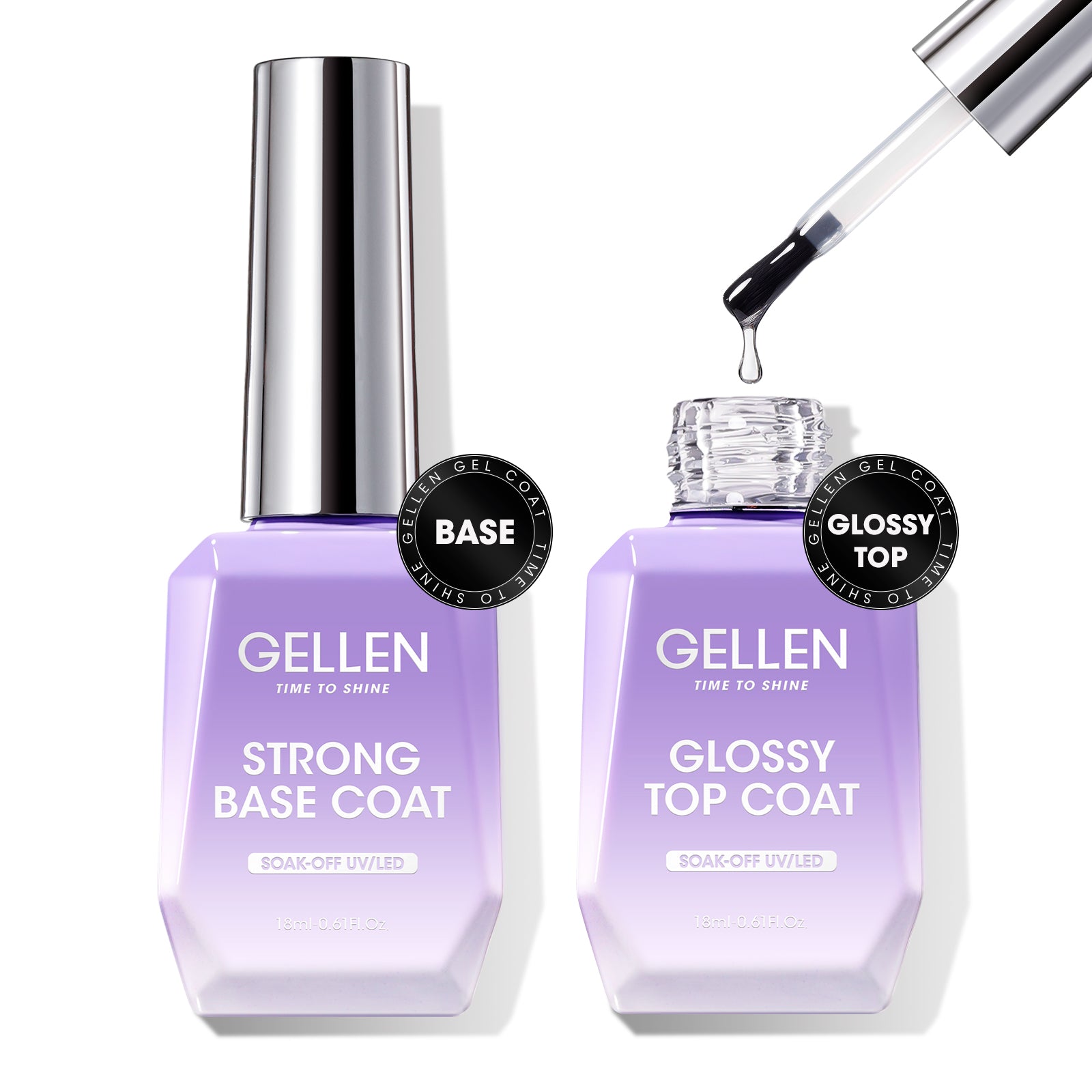
Top coat is the layer most people think least about and it decides how the whole manicure reads. Same colour, same application — a matte top coat and a glossy top coat give you two completely different results. Here is how to choose, and what each one is quietly doing to how long your manicure lasts.
The short version
| Glossy top coat | Matte top coat | |
|---|---|---|
| Finish | High shine, reflective | Flat, velvety, no reflection |
| Makes colour look | Deeper and more saturated | Softer and more muted |
| Hides surface flaws | No — shine highlights ridges and bumps | Yes — a flat finish is far more forgiving |
| Shows fingerprints and oils | Rarely | More noticeably, especially on dark shades |
| Best for | Reds, jewel tones, French tips | Deep and muted shades, autumn and winter palettes |

What glossy top coat actually does
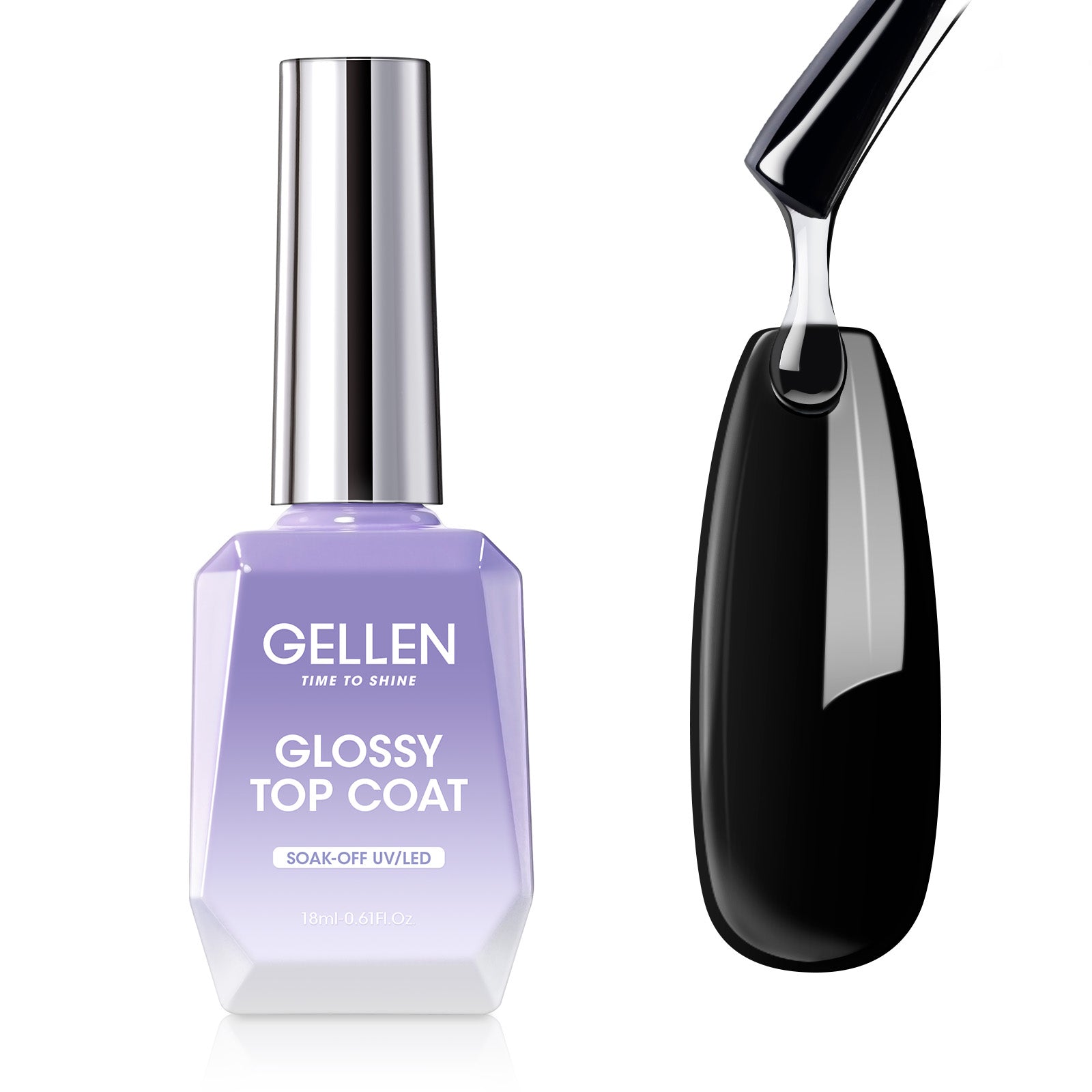
A glossy top coat cures to a smooth, level surface. Light hits it and bounces back evenly, which is what reads as shine. That even surface is also why gloss makes colour look richer — you are seeing the pigment through a clear, polished window rather than a textured one.
The trade-off: that same reflectivity shows everything underneath. Ridges in the nail plate, brush marks, a coat applied unevenly — gloss finds all of it. If your base is not smooth, gloss will tell on you.
What matte top coat actually does
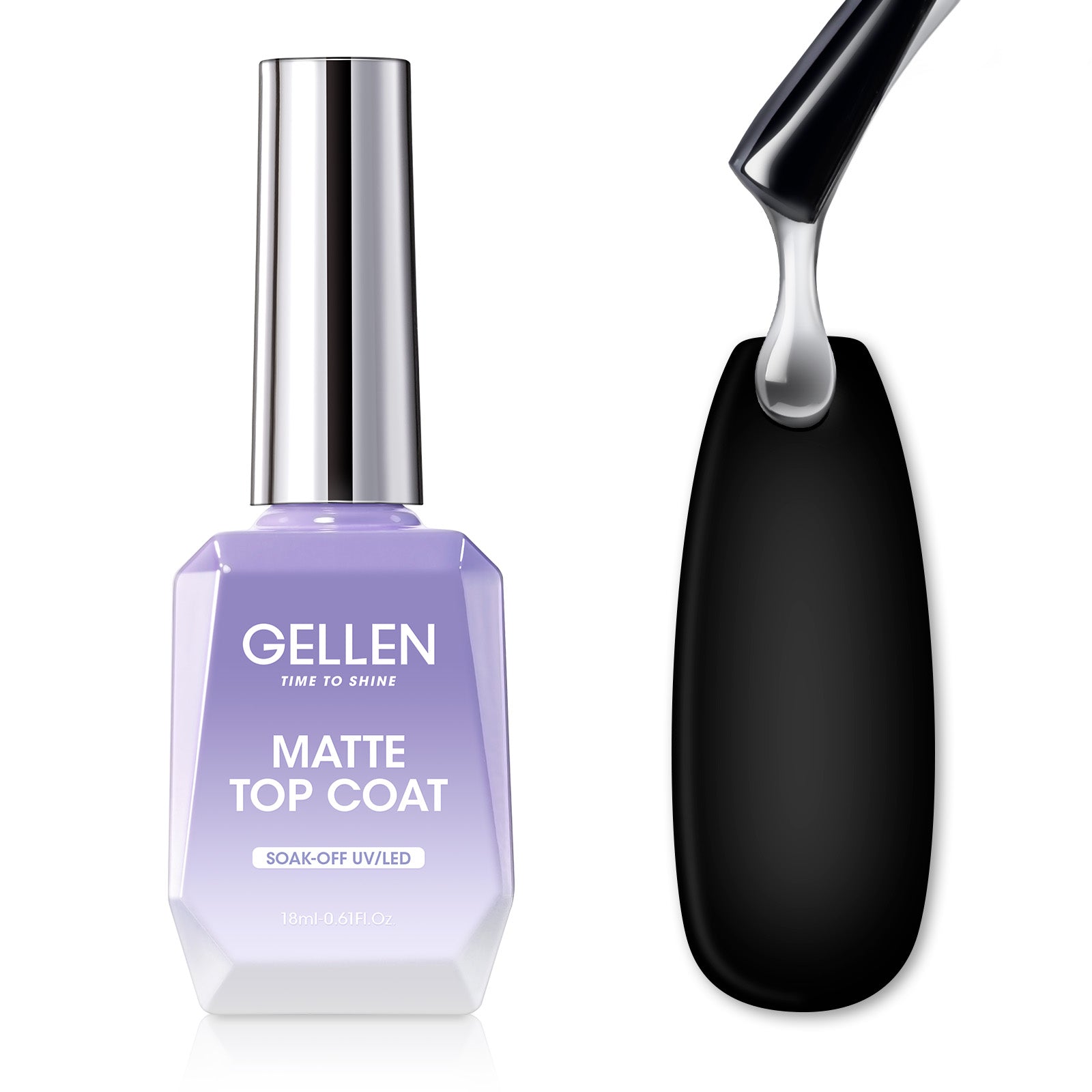
A matte top coat cures to a microscopically rough surface. Light scatters instead of reflecting, and you get that flat, suede-like finish.
That scattering is also why matte is so forgiving. Minor unevenness that gloss would highlight simply disappears. If you are new to gel and your coats are not perfectly level yet, matte is genuinely easier to get a clean-looking result with.
Two things to know before you commit:
- Matte shows oils. Cuticle oil, hand cream, and even natural skin oils leave visible marks on a matte finish. They wipe off, but on very dark shades you will notice them.
- Matte changes the colour. Not slightly — noticeably. A bright red goes brick. A navy goes slate. Swatch it before you commit a full set, because the bottle colour is not what you will get.

Choosing by colour
| Shade | Recommended | Why |
|---|---|---|
| Reds and corals | Glossy | Gloss keeps the saturation that makes these shades work |
| Black and deep navy | Matte | Flattens the shade into something softer and more wearable |
| Nudes and sheers | Glossy | Sheer formulas rely on shine for depth; matte can read chalky |
| Autumn browns and olives | Matte | Suits the muted palette |
| Glitter and shimmer | Glossy | Matte flattens the sparkle you paid for |
| French tips | Glossy | Crisp line reads better with shine |
You can use both
Some of the most interesting nail looks combine the two on the same hand or even the same nail:
- Matte base with a glossy accent nail — one shiny nail per hand, usually the ring finger.
- Matte body with glossy tips — a French tip in gloss over a matte base.
- Glossy nail art on a matte background — paint the design in clear gloss over a cured matte finish.
The order matters: cure the base colour, apply matte where you want it, cure, then apply gloss only where you want shine.
Application notes
- Cap the free edge with the top coat too. The top coat is what seals the manicure. If you skip the tip, that is where lifting starts.
- Thin and even. A thick top coat can pool at the cuticle and shrink back as it cures.
- Matte does not need buffing. The flat finish comes from the formula, not from sanding it.
Shop the products in this guide